CIT can broadcast your seminar, conference or meeting live to a world-wide
audience over the Internet as a real-time streaming video. The event can
be recorded and made available for viewers to watch at their convenience
as an on-demand video or a downloadable podcast. CIT can also broadcast
NIH-only or HHS-only content.
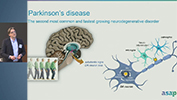
Dr. Guo is both a physician and a scientist devoted to understanding the fundamental mechanisms that lead to neurological diseases. The Guo lab utilizes Drosophila as models for their disease-related research, specifically on the two most common neurodegenerative diseases, Alzheimer's disease and Parkinson's disease. In their first line of study, the Guo lab seeks to understand the regulation of amyloid precursor protein (APP) cleavage by gamma-secretase, APP steady state levels, and the fate of the APP intracellular domain (AICD). Towards this goal, they have developed an in vivo reporter system to identify these regulators through a function-based genetic screen of the Drosophila eye. They have shown that ubiquilin is antagonistic to presenilin function and promotes neurodegeneration. The second line of study in the Guo lab focuses on mutant flies lacking pink1, which result in defects in mitochondrial morphology and function, increasing the fly’s sensitivity to stress and reducing its life span. Remarkably, they show that overexpression of human PINK1 rescues cellular defects due to loss of pink1 function in flies. In addition, pink1 acts in the same genetic pathway as parkin, another gene linked to familial PD, to regulate mitochondrial function. Furthermore, pink1 and parkin promote mitochondrial fission and/or inhibit fusion. Overall, their studies underscore the importance of mitochondrial dysfunction as a central mechanism for PD pathogenesis. The identification of the pink1/parkin pathway with a mitochondria localized kinase (PINK1) and an E3 ubiquitin ligase (Parkin) opens the doors to the study of intra-mitochondrial signaling, nuclear-mitochondria signaling, and mitochondrial function.
Molecular pathways to Alzheimer's and Parkinson's disease [electronic resource] / Ming Guo.
Series:
Molecular pathways to Parkinson's disease
Author:
Guo, Ming. National Institutes of Health (U.S.)
Publisher:
[Bethesda, Md. : National Institutes of Health, 2012]
Other Title(s):
Molecular pathways to Parkinson's disease
Abstract:
(CIT): Dr. Guo is both a physician and a scientist devoted to understanding the fundamental mechanisms that lead to neurological diseases. The Guo lab utilizes Drosophila as models for their disease-related research, specifically on the two most common neurodegenerative diseases, Alzheimer's disease and Parkinson's disease. In their first line of study, the Guo lab seeks to understand the regulation of amyloid precursor protein (APP) cleavage by gamma-secretase, APP steady state levels, and the fate of the APP intracellular domain (AICD). Towards this goal, they have developed an in vivo reporter system to identify these regulators through a function-based genetic screen of the Drosophila eye. They have shown that ubiquilin is antagonistic to presenilin function and promotes neurodegeneration. The second line of study in the Guo lab focuses on mutant flies lacking pink1, which result in defects in mitochondrial morphology and function, increasing the fly"s sensitivity to stress and reducing its life span. Remarkably, they show that overexpression of human PINK1 rescues cellular defects due to loss of pink1 function in flies. In addition, pink1 acts in the same genetic pathway as parkin, another gene linked to familial PD, to regulate mitochondrial function. Furthermore, pink1 and parkin promote mitochondrial fission and/or inhibit fusion. Overall, their studies underscore the importance of mitochondrial dysfunction as a central mechanism for PD pathogenesis. The identification of the pink1/parkin pathway with a mitochondria localized kinase (PINK1) and an E3 ubiquitin ligase (Parkin) opens the doors to the study of intra-mitochondrial signaling, nuclear-mitochondria signaling, and mitochondrial function.
Subjects:
Drosophila Mitochondria--metabolism Models, Animal Parkinson Disease--genetics Protein Kinases--metabolism Ubiquitin-Protein Ligases--metabolism