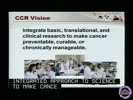
CIT can broadcast your seminar, conference or meeting live to a world-wide
audience over the Internet as a real-time streaming video. The event can
be recorded and made available for viewers to watch at their convenience
as an on-demand video or a downloadable podcast. CIT can also broadcast
NIH-only or HHS-only content.
ERCP is a procedure used by physicians to diagnose and treat problems in the liver, gallbladder, bile ducts, and pancreas. It combines the use of x-rays and an endoscope--a long, flexible, lighted tube. The physician inserts the endoscope in a patient's mouth and guides it down through the esophagus and into the stomach and small intestine. ERCP allows the physician to look inside these organs and also to send dye to the bile and pancreatic ducts, thereby making them visible on an x-ray.
Endoscopic retrograde cholangiopancreatography (ERCP) for diagnosis and therapy [electronic resource] / NIDDK ... [et al.].
Author:
National Institute of Diabetes and Digestive and Kidney Diseases (U.S.)
Publisher:
[Bethesda, Md. : National Institutes of Health, 2002]
Abstract:
(CIT): ERCP is a procedure used by physicians to diagnose and treat problems in the liver, gallbladder, bile ducts, and pancreas. It combines the use of x-rays and an endoscope--a long, flexible, lighted tube. The physician inserts the endoscope in a patient's mouth and guides it down through the esophagus and into the stomach and small intestine. ERCP allows the physician to look inside these organs and also to send dye to the bile and pancreatic ducts, thereby making them visible on an x-ray.