CIT can broadcast your seminar, conference or meeting live to a world-wide
audience over the Internet as a real-time streaming video. The event can
be recorded and made available for viewers to watch at their convenience
as an on-demand video or a downloadable podcast. CIT can also broadcast
NIH-only or HHS-only content.
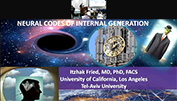
General anesthesia is a drug-induced, reversible condition comprised of five behavioral and physiological states: unconsciousness, amnesia (loss of memory), analgesia (loss of pain sensation), akinesia (immobility), and cardiovascular, respiratory and thermoregulatory stability with control of the stress response. The mechanisms by which anesthetic drugs induce the state of general anesthesia is considered one of the biggest mysteries of modern medicine. We have been using three experimental paradigms to study general anesthesia-induced loss of consciousness in humans: combined fMRI/EEG recordings, high-density EEG recordings and intracranial recordings. These studies are allowing us to establish precise neurophysiological, neuroanatomical and behavioral correlates of general anesthesia. We will discuss the relation between our findings and two other important altered states of arousal: sleep and coma. Our findings suggest that the state of general anesthesia is not as mysterious as currently believed.